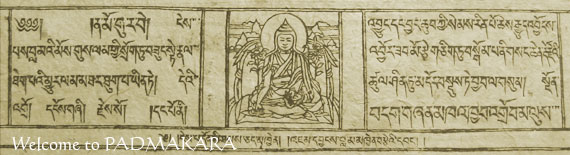


Tibet, its language & its literature
The following articles, written by the Padmakara Translation Group, describe the history and importance of Tibetan literature, the urgency to preserve the texts which have survived the Chinese occupation, and also convey the signficance of these texts within our modern society, and their potential to contribute to the peace and happiness of humanity.
- Tibetan: a vessel of wisdom
- The history of Tibet’s unique literature
- Tibetan literature: a vast treasury mostly unexplored
- Preserving rare & endangered books
- Making this world heritage accessible
- Maintaining the oral transmission
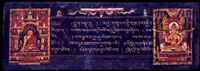
Sacred Tibetan text, written in gold
A language, in its highest form, contains and conveys knowledge. The Tibetan language, in particular, contains a wealth of profound knowledge acquired over the generations and centuries by scholars and masters—not only Tibetan sbut Indian, too, for starting in the seventh century a vast body of knowledge discovered and developed during the golden age of Buddhism in India was systematically translated into Tibetan from Pali and Sanskrit, there to be preserved long after most of the original texts in India had been lost.

